Overview
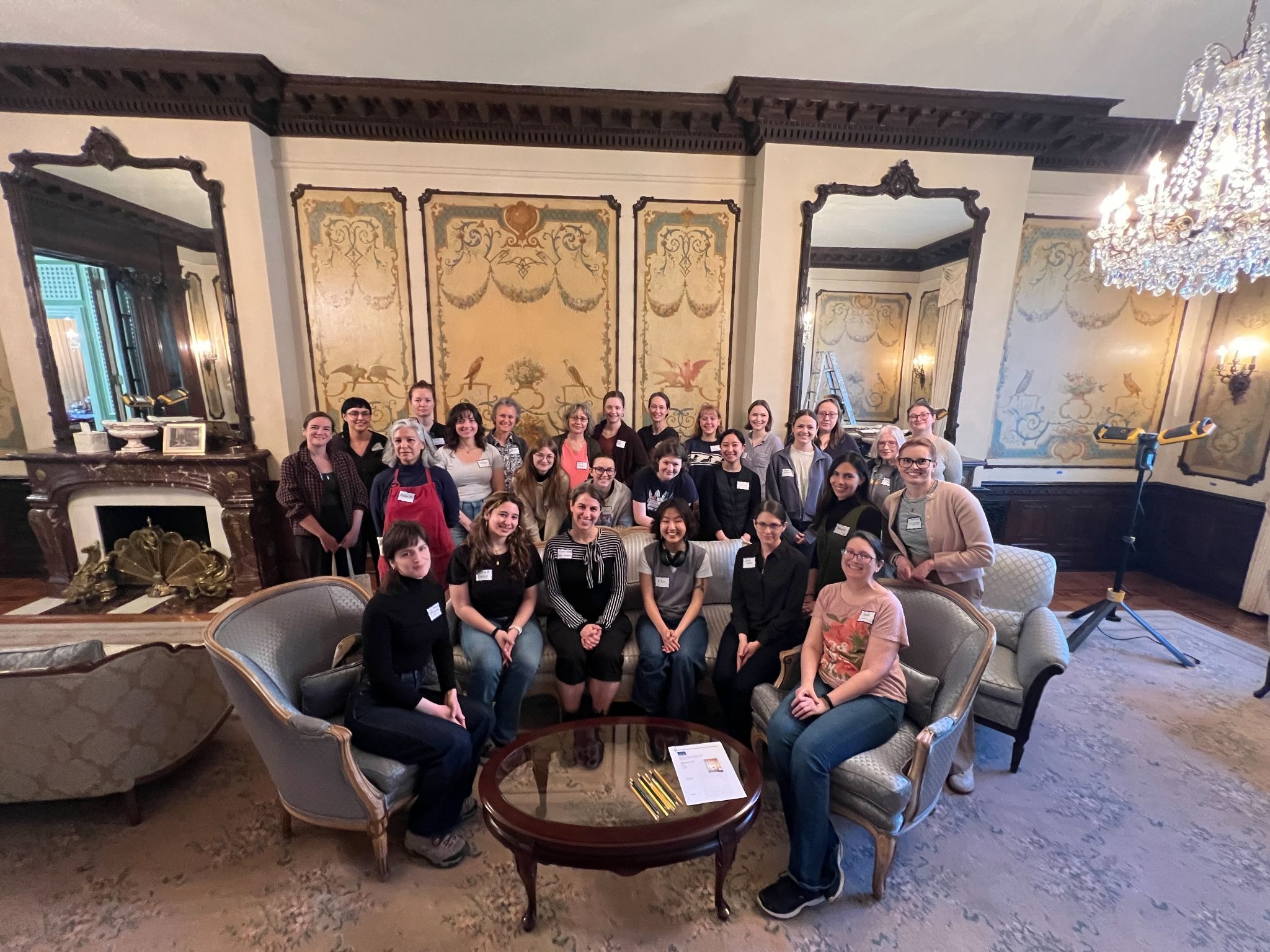
WCG’s 2025–2026 Season Community Partnership Project took place at the General Federation of Women’s Clubs Headquarters at 1734 N St NW, Washington DC, on April 11, 2026. Over 30 WCG volunteers at different levels of career development gathered and were separated by specialization to document, assess, and rehouse 125 objects significant to GFWC’s history.
GFWC is the oldest organization of Women’s volunteer groups in the country, dating back to 1890, and has also been proud to include international chapters throughout its history, reflecting its members’ travels and commitment to diplomacy. Its history and the service of its members is documented in its own Women’s History and Resource Center, founded in 1984. Highlights of the WHRC collection include scrapbooks showing the Federation’s involvement in the Suffrage movement, historic quilts, and inscribed silver given as gifts of sorority by Presidents from international chapters.
The one-day project in April 2026 was the culmination of a seven-month joint organizing effort between WCG and the GFWC Women’s History and Research Center Librarian, Joanna Church.
Interest in the project, in the months leading up to it, was helped by a talk that Joanna gave at WCG’s February 2026 Three-Ring Circus about the challenges of caring for a collection in a working historic property. GFWC’s headquarters was a unique site for a conservation project in that, while it is a historic building housing the WHRC archives and many culturally significant objects, it is also a working gathering space for the present-day members of the GFWC and the home of its sitting President. Curious staff and volunteers from GFWC joined Joanna and WCG on the day of the project to learn about conservation and collections care practices that they could implement and advocate for in their space moving forward.
The Project was a success both in the scope of artifacts treated and also in connecting two DC-based, women-led groups during a challenging political time.
Teams
Works on Paper
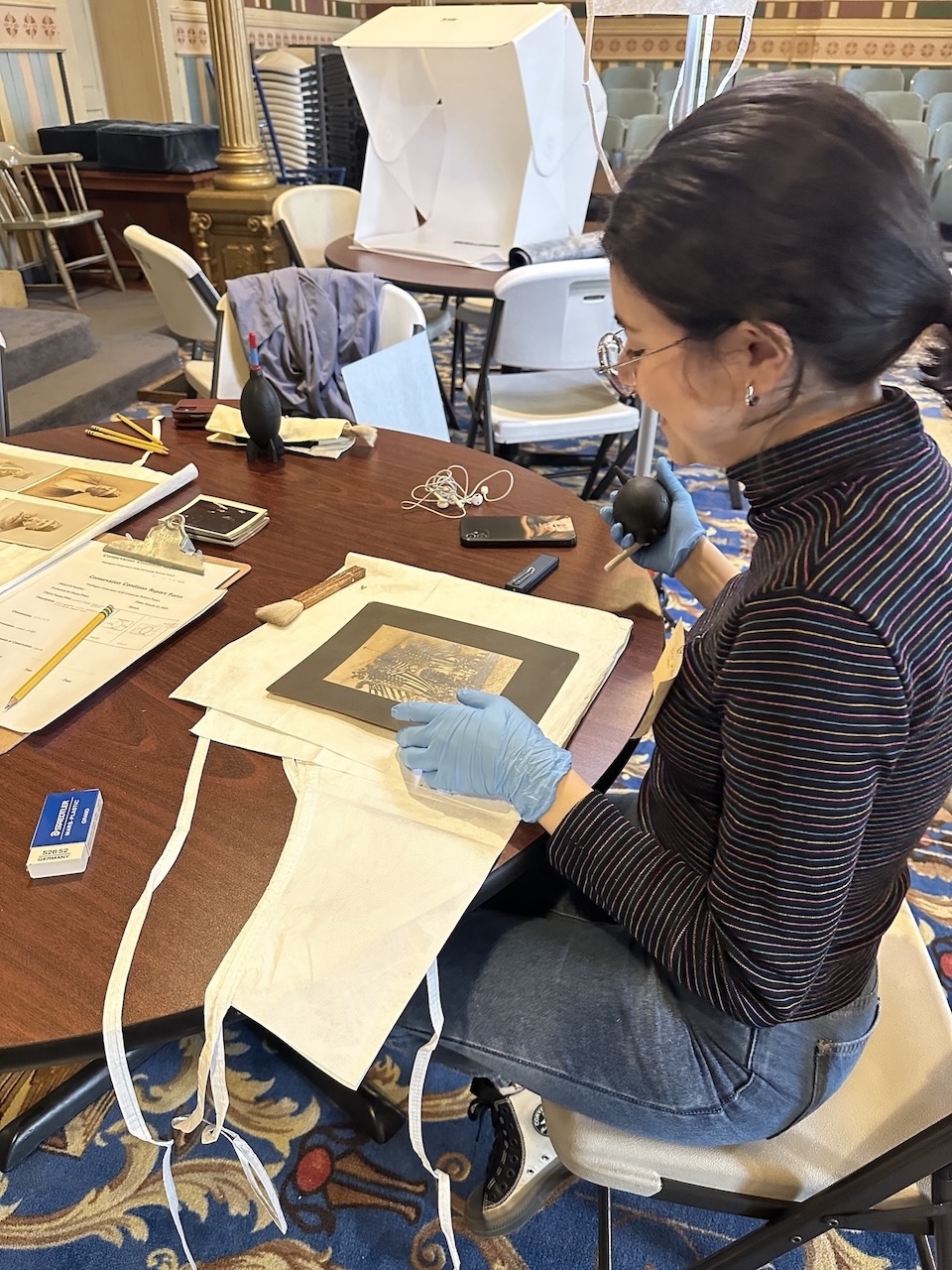
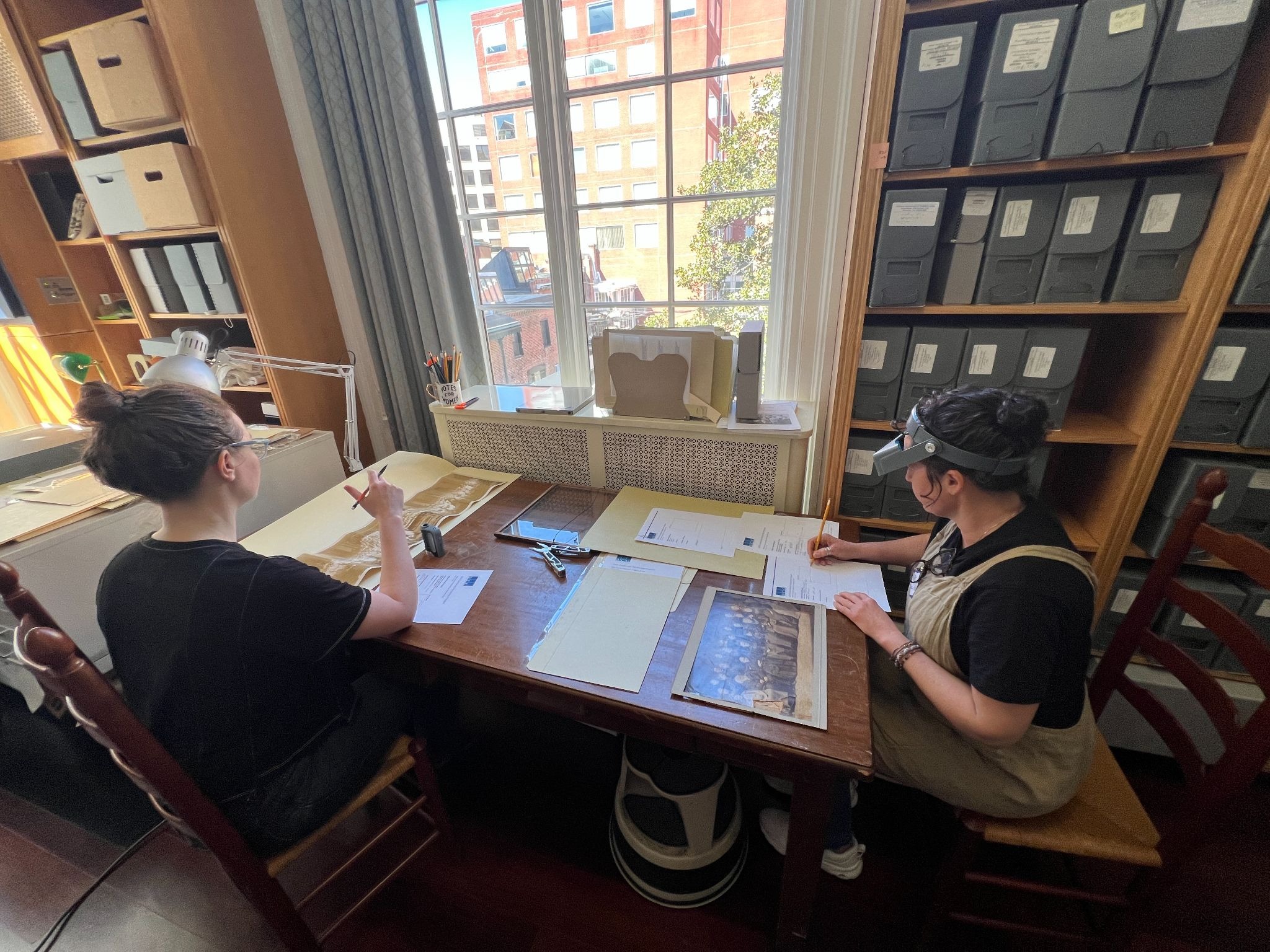
The WHRC archives had the biggest volume of materials to be assessed. On the day of the project, professional conservators and pre-program volunteers worked alongside station co-facilitators Ewa Paul and Jane Klinger to assess and develop treatment recommendations for representative objects from the WHRC’s collection. Re-framing with archival materials was recommended for watercolor paintings, prints, and photographs. Consolidation of leather covers, the introduction of interleaving archival-grade tissue paper, and the digitization of scrapbook contents for research purposes was recommended for scrapbooks dating as far back as the 1920’s.
Textiles Team
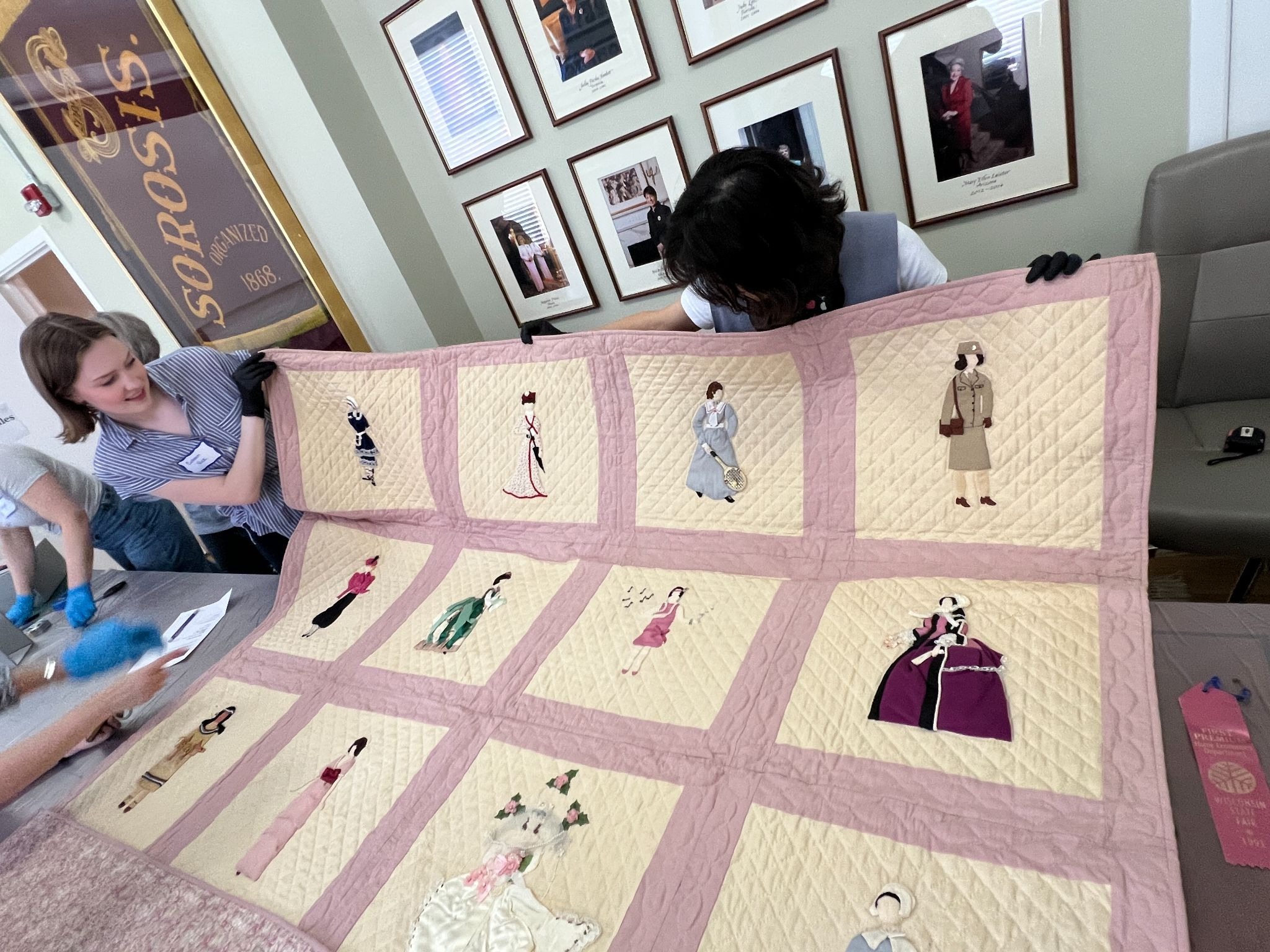
Nancy Pollak and Katya Zinsli co-facilitated the textiles portion of the GFWC project. They instructed and guided early pre-program volunteers as this team worked together to provide preventive treatment for seven historic quilts, banners, and tapestries. The textiles were vacuumed with HEPA filter-fitted museum vacs before being rolled in buffered tissue and rehoused.
Books Team
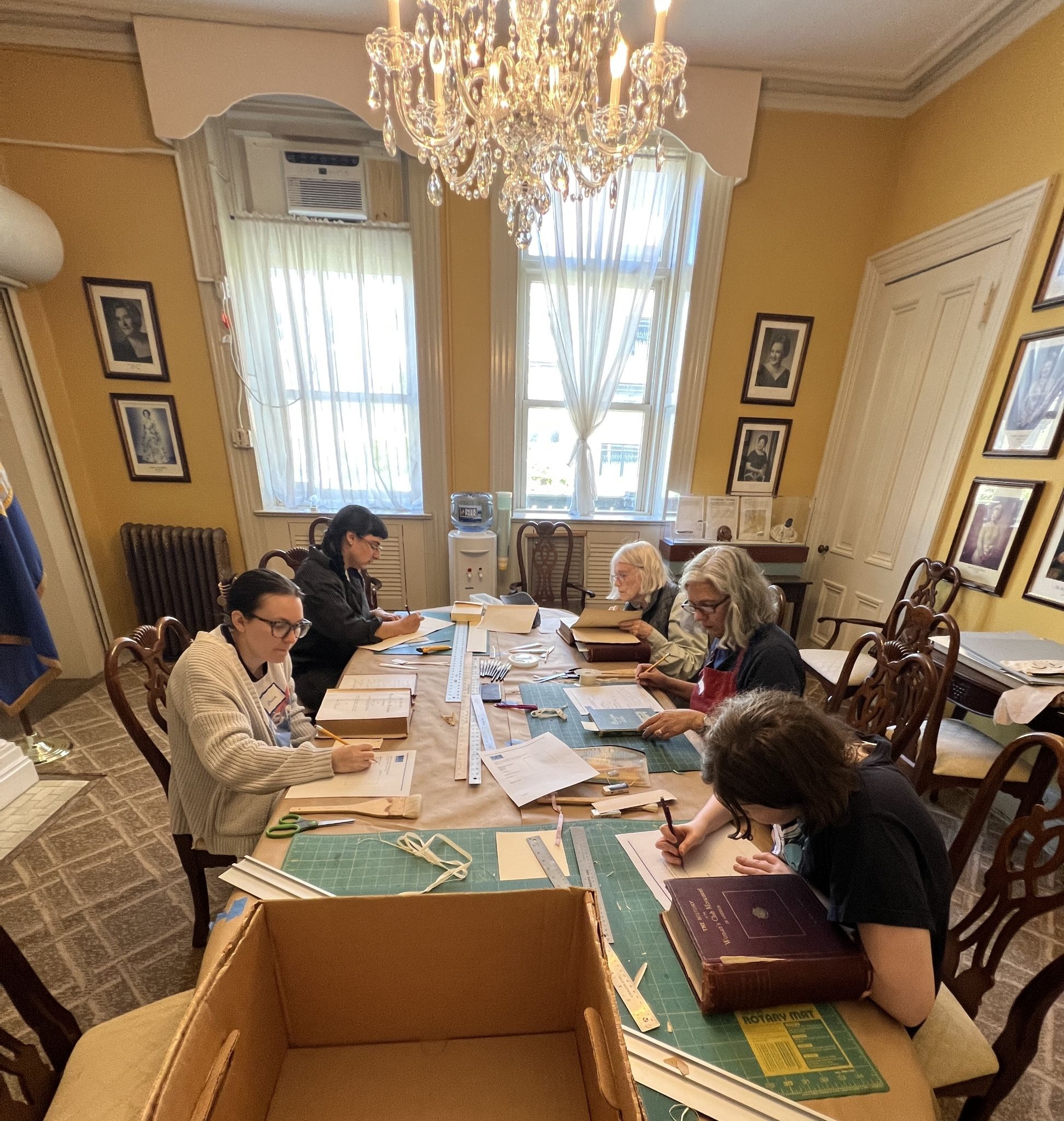
Working with station facilitator Anne Marigza, the Books team assessed 33 representative volumes from the WHRC. This was a valuable educational opportunity for pre-program volunteers to gain experience in evaluating objects for both short-term preventative care and longer-term care needs.
Paintings Team
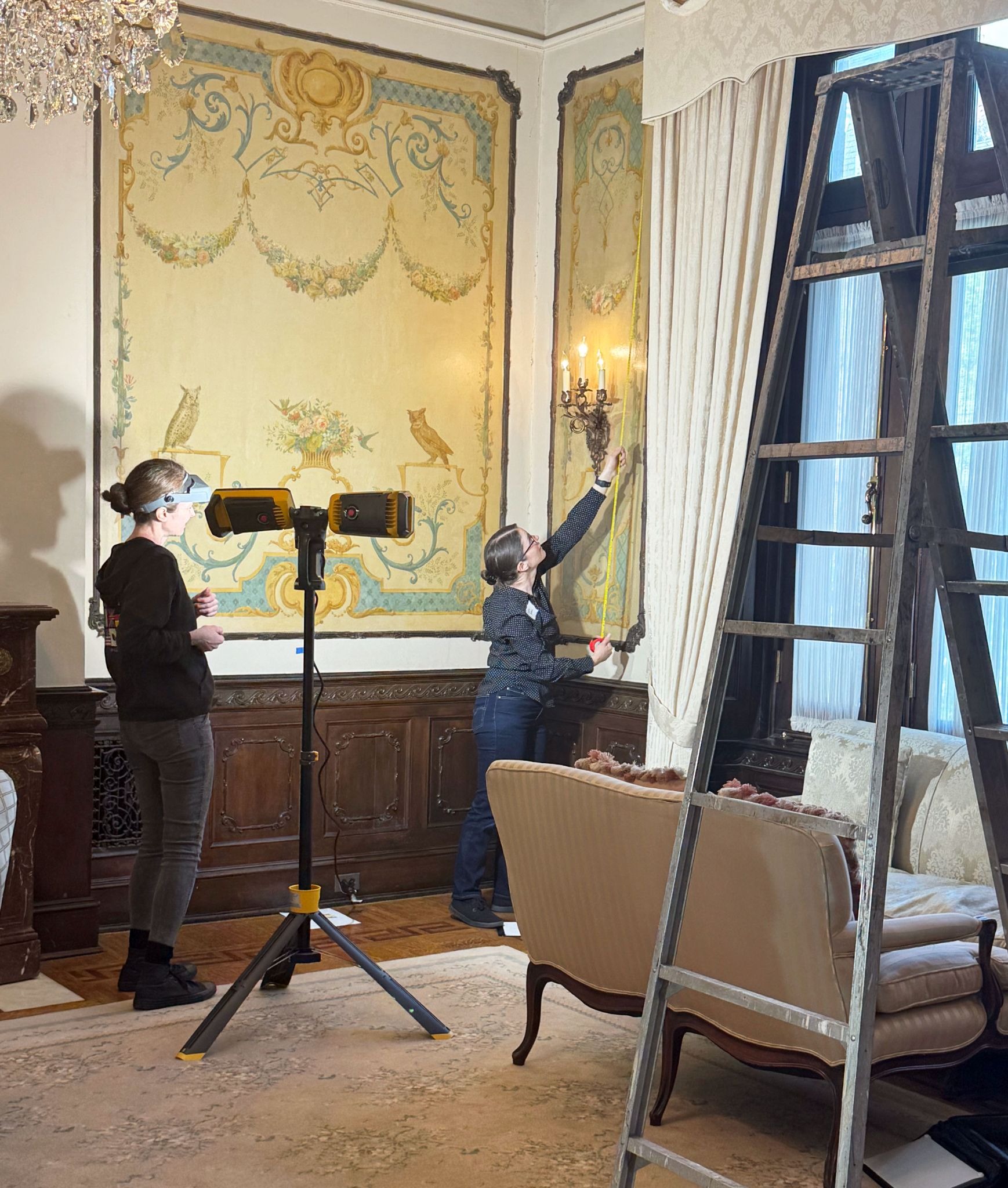
Kristen Loudermilk led the Paintings team in assessing seven works on canvas as well as the 11 wall panels prominently displayed in the front drawing room of GFWC Headquarters. As with the Books team, Paintings helpfully provided recommendations for future interventive treatment alongside more immediate adjustments to environmental conditions that could be made to support the longevity of the collection. Christy Jackson supplied a full treatment survey of the wall panels, providing a rough time estimate of 600-800 hours for their care and recommending an initial pilot project fully treating 1-2 wall panels to better refine time needed for the remainder of the room.
Objects Team
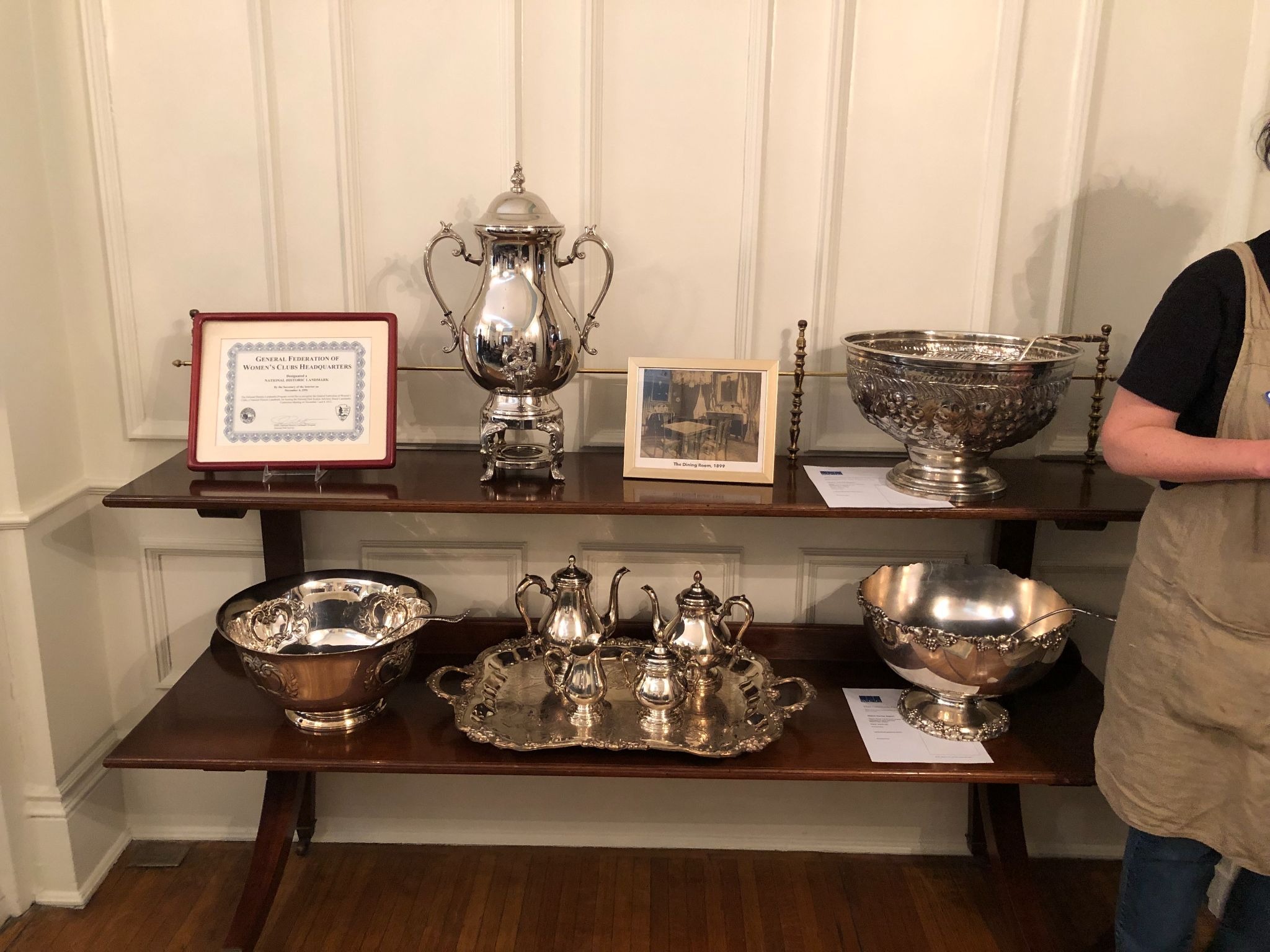
The co-coordinators of the Community Partnership Project, Liatte Dotan and Jen McNulty, shared the duties of heading the Objects team. The main focus of this team was the care of the GFWC’s collection of silver. Pre-program volunteers learned to distinguish between solid and plated silver objects and the different care needs of the two object types. Treatment recommendations were further refined depending on whether an object would be intended for storage, display, or ongoing use. GFWC volunteers and staff present listened in during these discussions and a silver polishing demonstration. Other objects in the collection assessed included German porcelain figurative lamps and a 19th-century saddle.
Acknowledgements
Thank you to Joanna Church, GFWC WHRC Librarian, for reaching out to WCG about this project, giving an illuminating talk on the challenges of archival and conservation work in a working historic property, for your careful cataloging work, and for all of your contributions during the planning of this year’s project.
Thank you Keara Teeter, for going above and beyond as WCG’s President and our ongoing supporter throughout the project’s planning stages and keeping operations running smoothly the day of the Project—in taking the time to help us set up, break down, and provide a model of leadership.
Thank you University Products, WCG Diamond-level sponsor, for providing funding that made this year’s Community Partnership Project possible.
Thank you WCG member Gwen Manthey for lending equipment, including HEPA vacuums and work lights.
Thank you to GFWC volunteers and staff for your hospitality, helpfulness, and eagerness both to learn about the work we do as conservators and to teach us about your organization’s work and history.
Lastly, thank you to the wonderful team of WCG members who came out to volunteer at our Community Partnership Project this spring! Here’s to many more.