
WCG Member Workshop Recap: Make Your Own Natural Dye Textile with Fatima Janneh
March 28, 2026
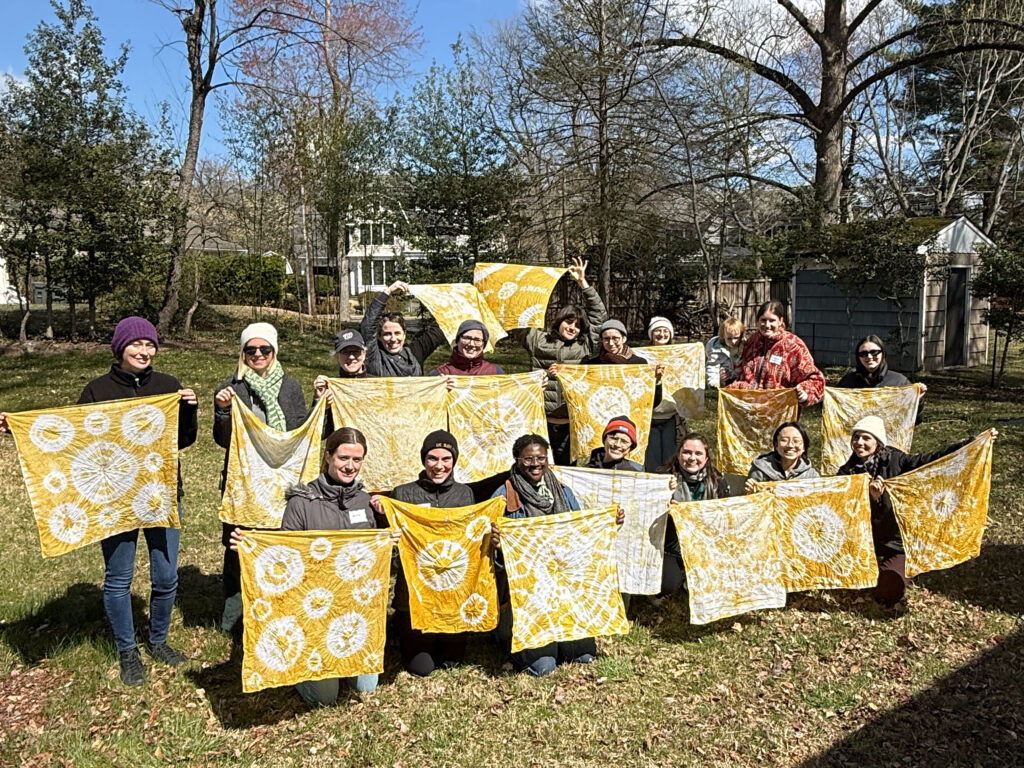
On Saturday, March 28th, our members gathered for a morning full of hands-on exploration into the art of natural dyeing, working with marigold flowers to produce a range of vibrant yellow bandanas. Under the guidance of textile artist and instructor Fatima Janneh, we were introduced not only to the practical steps of the dye process, but also to the material properties that make plant-based dyes so fascinating.
We began with a discussion of what natural dyeing entails. Plant-based dyeing involves extracting pigments from materials such as flowers, leaves, bark, and roots by simmering them in water to create a dye bath. Common sources include onion skins, turmeric, beets, and marigolds—which produce yellows and oranges—as well as indigo and red cabbage, which can yield blues and purples under the right conditions.
For this workshop, we worked with marigold flowers, which are particularly rich in pigments that produce warm, golden hues. However, Fatima also explained how other colors can be achieved. She noted that certain colors (especially “true” black and green) can be more challenging to achieve with natural dyes. Green, for instance, is not typically obtained directly from a single plant dye in a stable way; instead, it is often created through layering processes. An example of one common method is to first dye a textile yellow (as we did with marigolds), and then over dye it in an indigo bath. Indigo, unlike most plant dyes, requires a reduction process to become soluble in water, so once the fabric is dipped and then exposed to air, oxidation develops the blue color. When combined with the underlying yellow, the result is a range of greens.
It was emphasized that for a successful dye process—particularly on cellulose fibers like cotton, which do not readily bind with natural dyes in the way protein fibers such as wool or silk do—a number of additional materials, called mordants and modifiers, are required. It was also highlighted that synthetic fibers like acrylic are essentially plastic and these polymers do not absorb plant dyes well at all, often resulting in little to no color uptake. This makes fiber choice an important first consideration in any natural dye process. Meanwhile, mordants such as alum help bind the dye to the fiber, improving both the intensity and longevity of the color. Modifiers, including substances like iron or vinegar, can be introduced during or after dyeing to shift the final hue; dulling, darkening, or otherwise altering the color in subtle or dramatic ways. Thus, our 100% cotton bandanas were pre-treated following these key steps prior to immersion dying:
- Scouring (cleaning the textiles): This initial step removes any oils, residues, or impurities from the fabric that might prevent even dye absorption or cause unwanted staining.
- Mordanting: This stage prepares the fiber to better accept the dye by creating sites within the material that can chemically bond with the pigment. For plant-based fibers, like cotton, this often involves the use of tannins followed by a mordant such as aluminum acetate. Unlike some processes, mordanting does not necessarily require heat and can be approached either scientifically (by calculating ratios based on the weight of the fiber) or more intuitively. Fatima shared that alum is commonly used for protein fibers like wool and silk, while aluminum acetate is generally preferred for cellulose fibers, like our bandana.
- Chalk bath (calcium carbonate): This step helps to adjust the pH of the fabric and can influence how the dye ultimately appears. The bath can be warm but does not need to be especially hot to be effective.
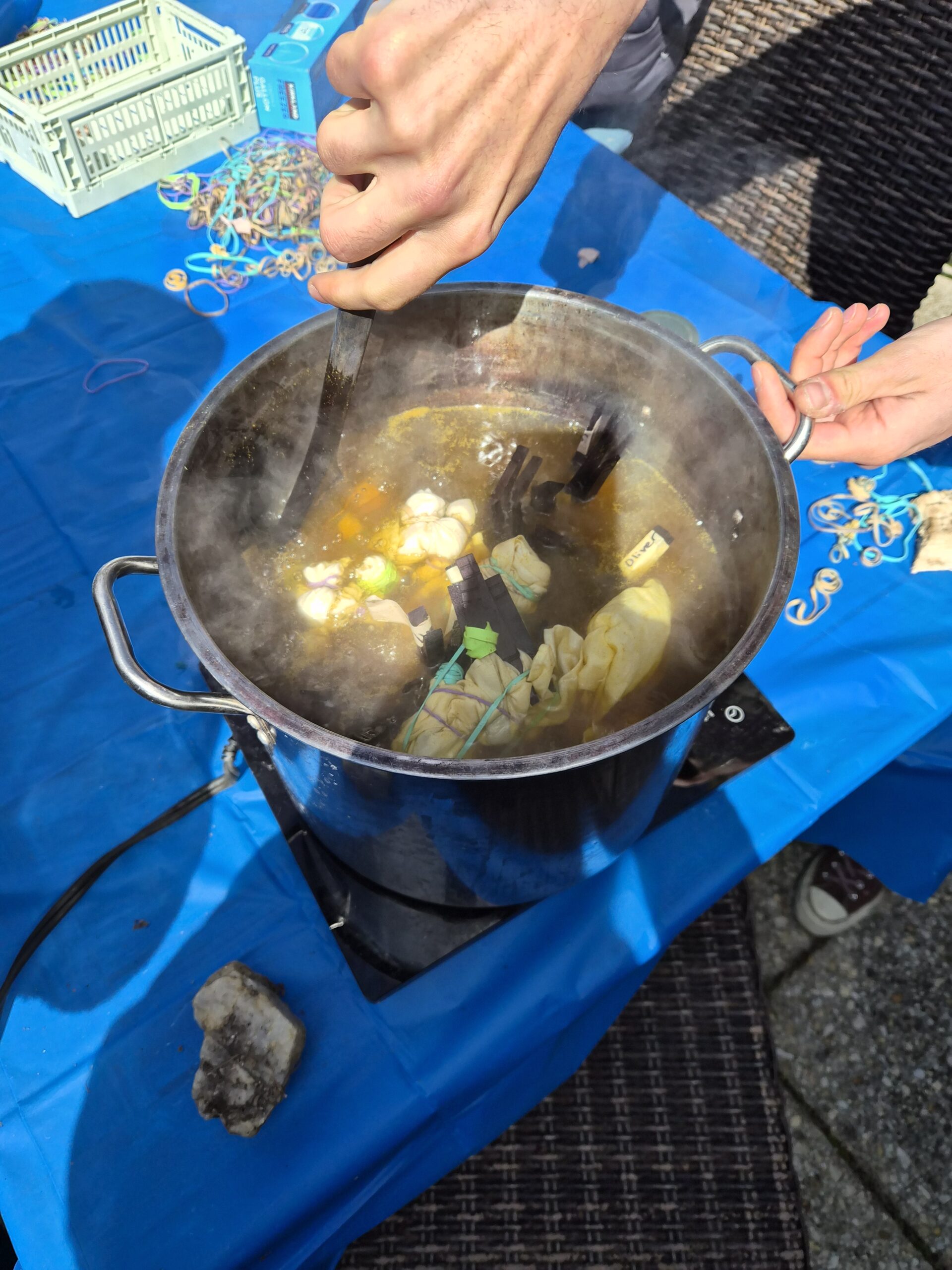
While a pot of water was set to heat with an intuitive amount of marigold extract by Fatima to prepare the dye bath, we began designing our bandanas using a variety of tying techniques. Each member approached this step differently—folding, twisting, and binding the fabric according to their own creative instincts. Rubber bands and wooden clothespins were used to secure areas of the cloth that would resist the dye, ultimately shaping how the color would penetrate the fabric. These resist methods produced a wide range of patterns, from more tightly controlled geometric designs to loose, organic compositions.
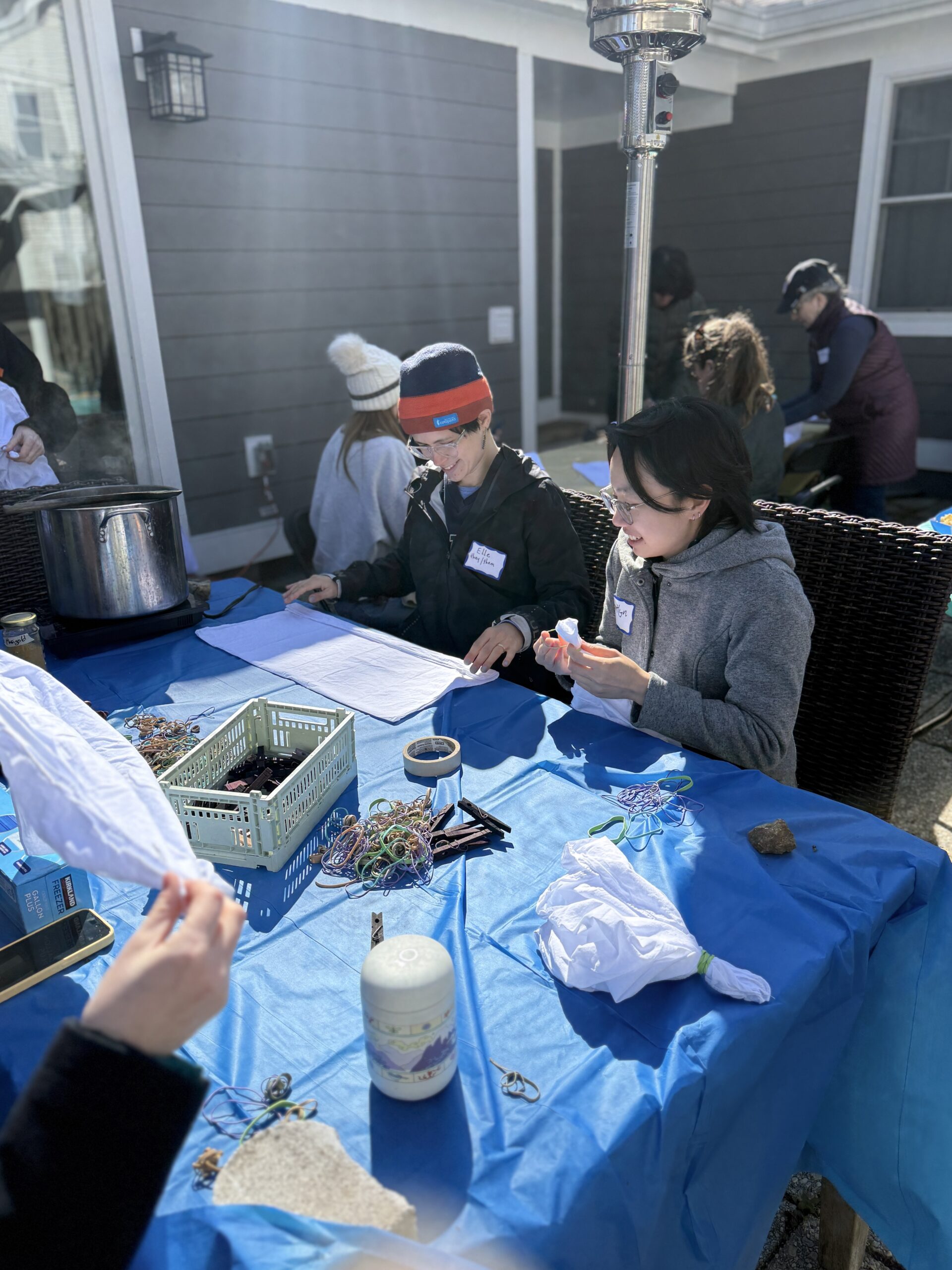
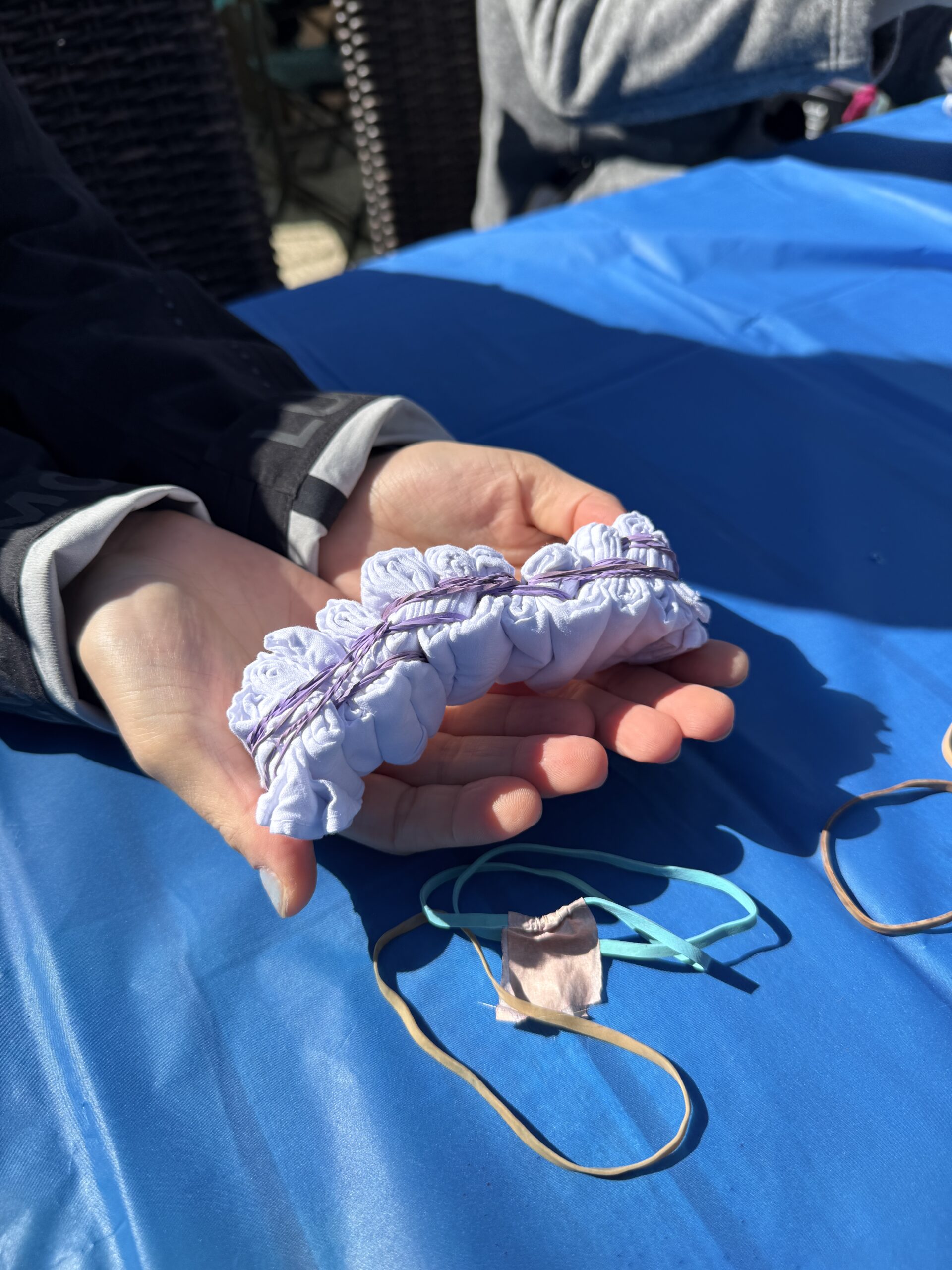
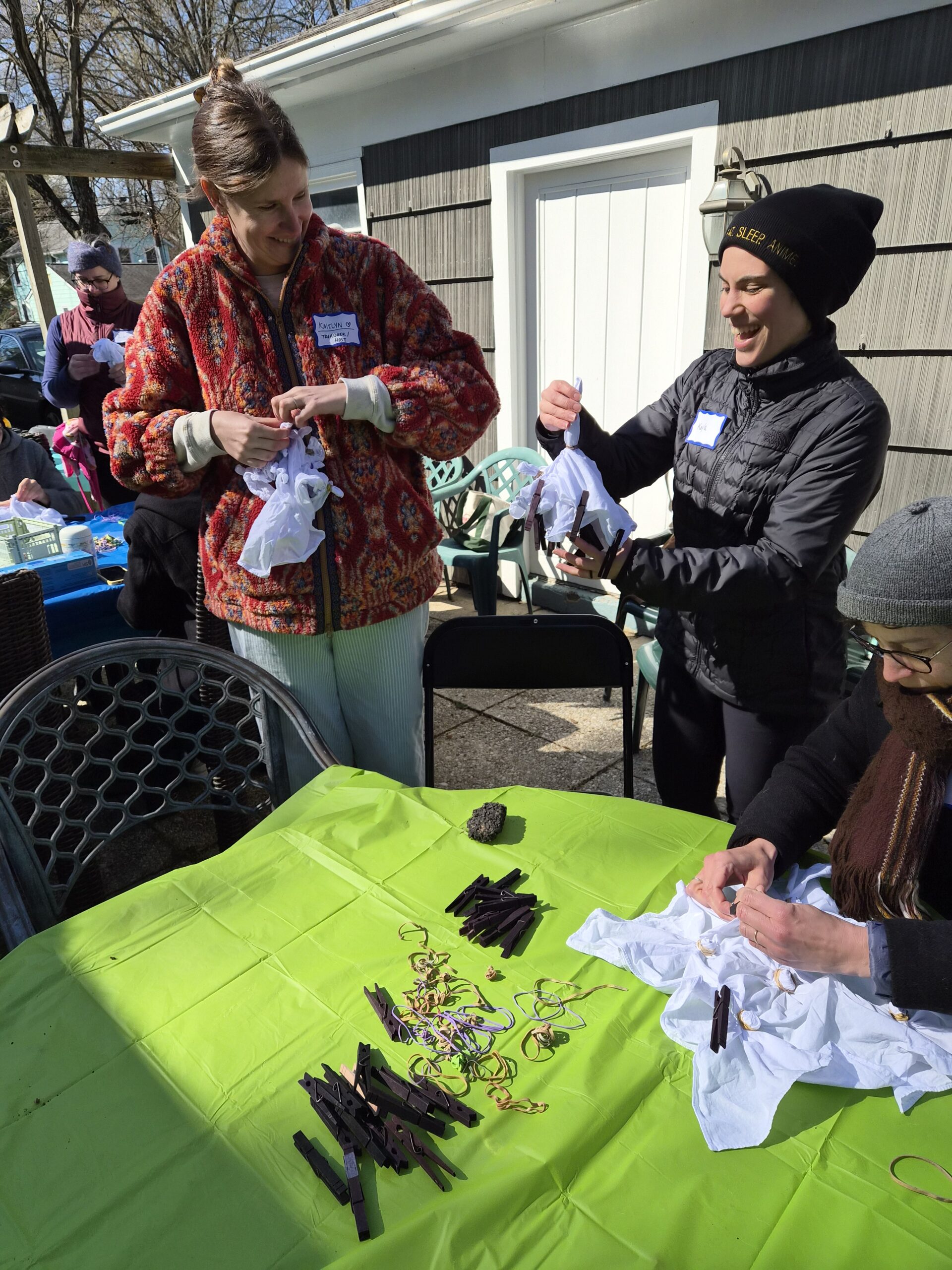
With our pieces prepared, we submerged them into the marigold dye bath and allowed the color to develop for approximately 20 minutes per batch. Because of the size of the group, we worked in two rounds, which provided time to step back, observe one another’s processes, and talk more broadly about techniques, conservation, and related interests. For those aiming to achieve a deeper, more saturated yellow, some participants chose to dip their bandanas a second time, extending their total time in the dye bath to around 40 minutes. We wrote our names on a piece of tape with a Sharpie to easily identify our abstractly tied bandana throughout the process.
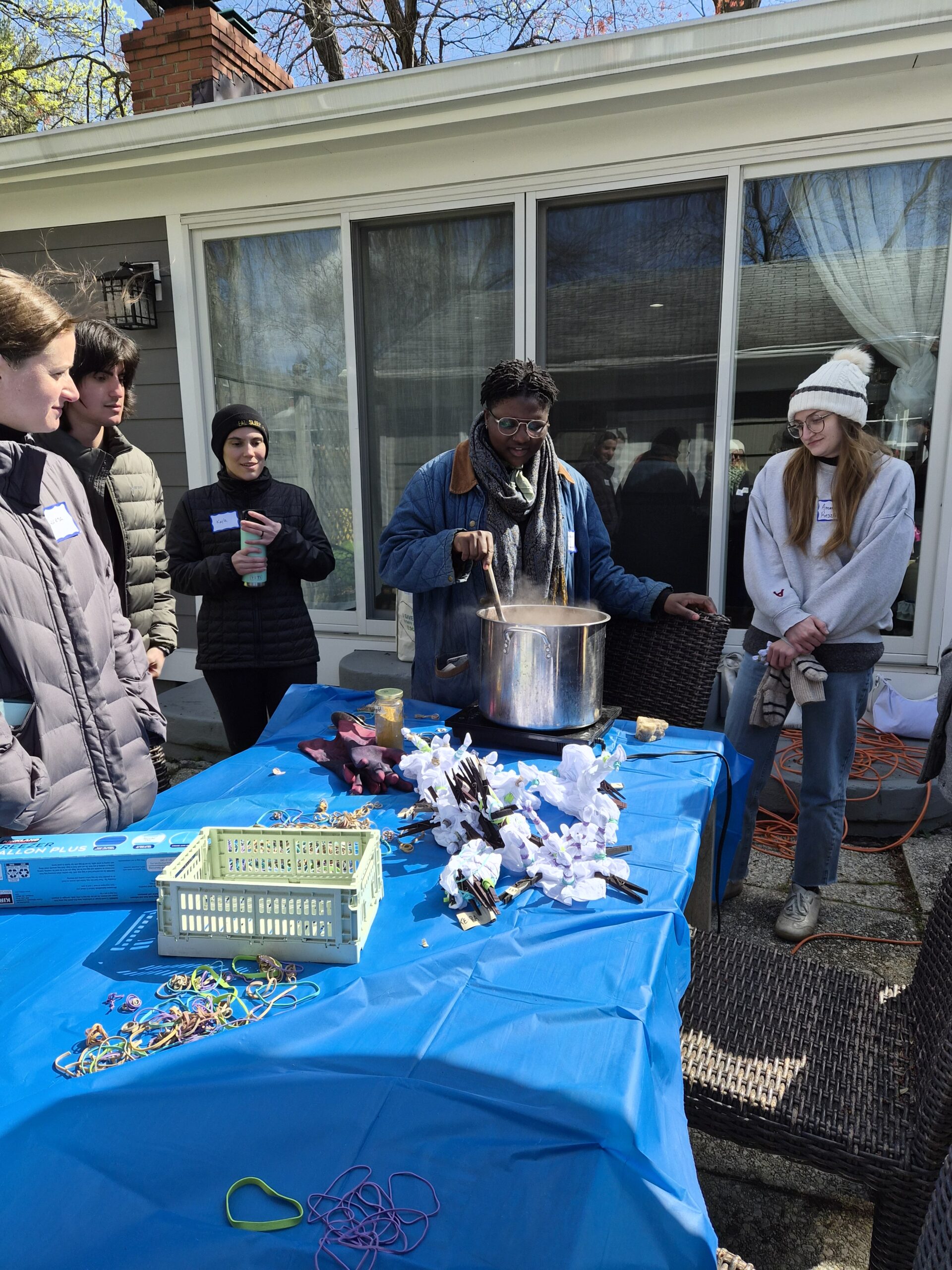
After sufficient soaking, the bandanas were removed and rinsed to remove excess dye and marigold residue. We then began taking off the pins and rubber bands to unwrap and reveal the finished patterns. Watching the transformation was one of the most satisfying parts of the workshop: everyone had created a completely unique design, often shaped as much by chance as by intention, highlighting the beautiful result of natural dyeing.
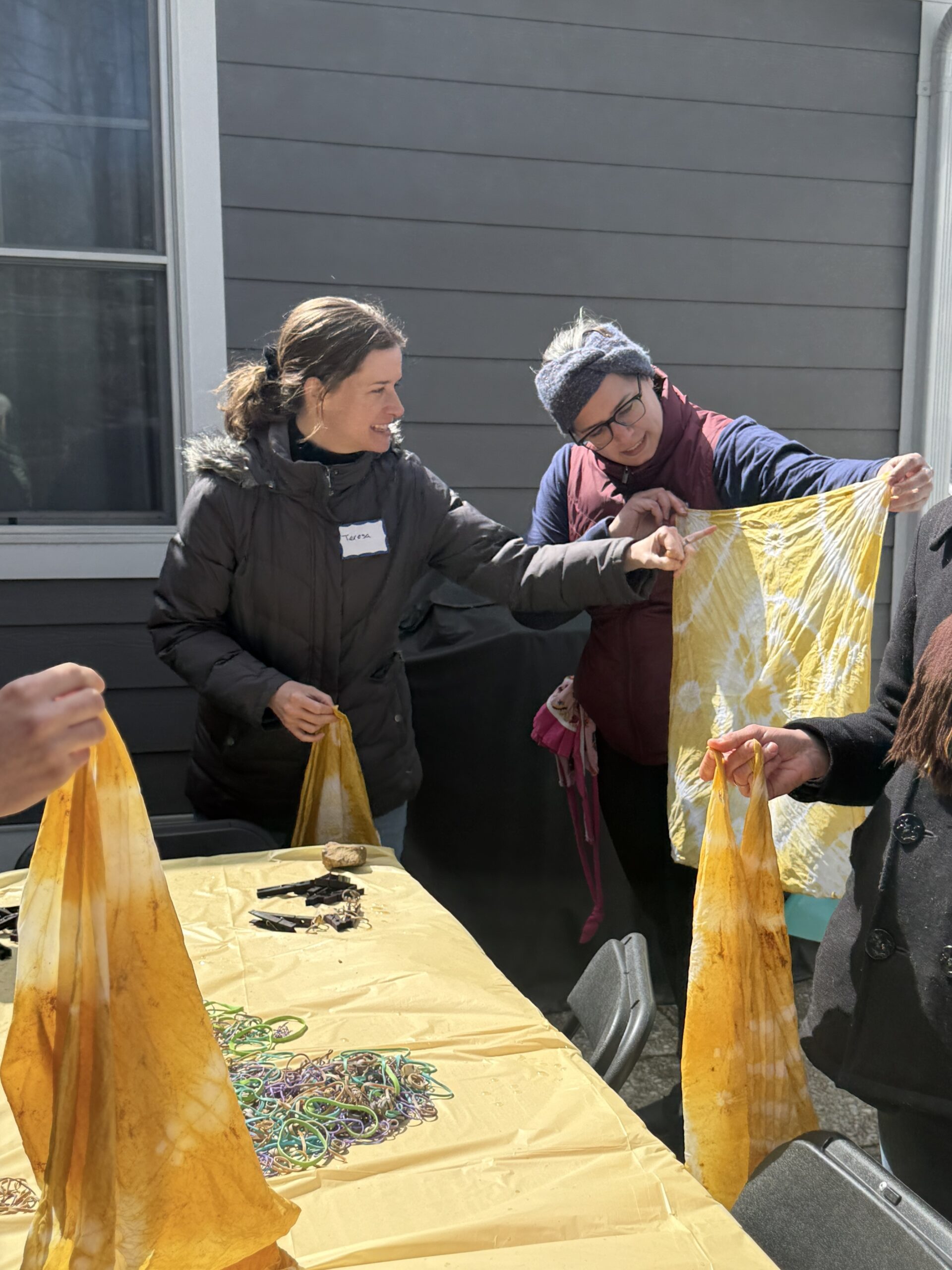
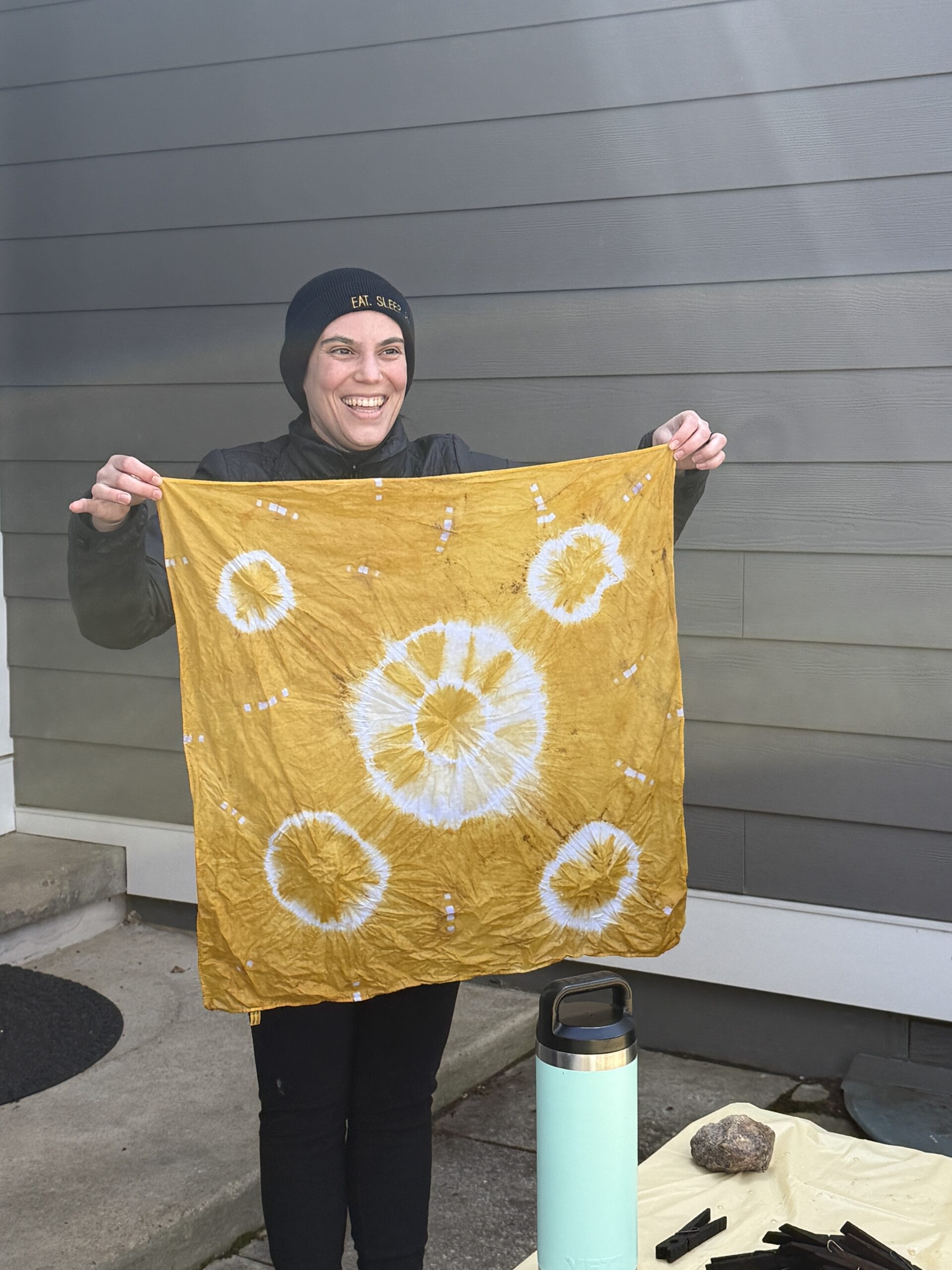
Throughout the process, Fatima shared lots of interesting factoids, offering encouragement to experiment while answering a wide range of questions from our members. Conversations moved easily between knitting practices and dye techniques, as well as the stability of natural pigments. We also talked about how everyday factors, like water and temperature, can really influence results. For example, water composition varies depending on geography; some places have higher levels of minerals or chlorine, which can subtly shift how colors develop and bond to the fabric.
For those curious to keep experimenting, Fatima shared with us two resources she turns to for learning more about natural dyeing:
- The Art and Science of Natural Dyes: Principles, Experiments, and Results, written by a textile engineer and chemist Joy Boutrup and textile artist and practitioner Catharine Ellis
- The Canadian website Maiwa, where information about natural dyes, mordants and tannins, extracts, raw materials, additives, and more can be found. They have a school of textiles (offering courses and workshops), a journal, and a store.
This was a Washington Conservation Guild member event for the 2025-2026 season. Thank you to Fatima for sharing her knowledge, and to all of our members for participating. A special thank you to our host and treasurer Kaitlyn Munro Seymour for providing a space where we could be creative and a little messy!
By Daniella Briceño Villamil, Outreach/ Member Events Coordinator